
DIY How-To
How to Change Your Furnace or AC Air Filter
A clean filter is the cheapest, easiest thing you can do for your heating and cooling system. This guide shows where your filter is, how to replace it in eight short steps, and how often to do it. If something does not look right along the way, call us.
At a Glance
5 minutes
Time
Most homeowners finish before the coffee cools.
Easy
Difficulty
No tools, no wiring and nothing to take apart.
1 to 3 months
How often
For standard 1-inch filters. Thicker media filters last longer.
One filter
What you need
A new filter in the same size as the old one.
Step-by-Step: Changing the Filter
Have the new filter ready before you start. If you are not sure which size to buy, begin at step 1 and bring the old filter, or a photo of its frame, to the store.
Step 1
Find your filter
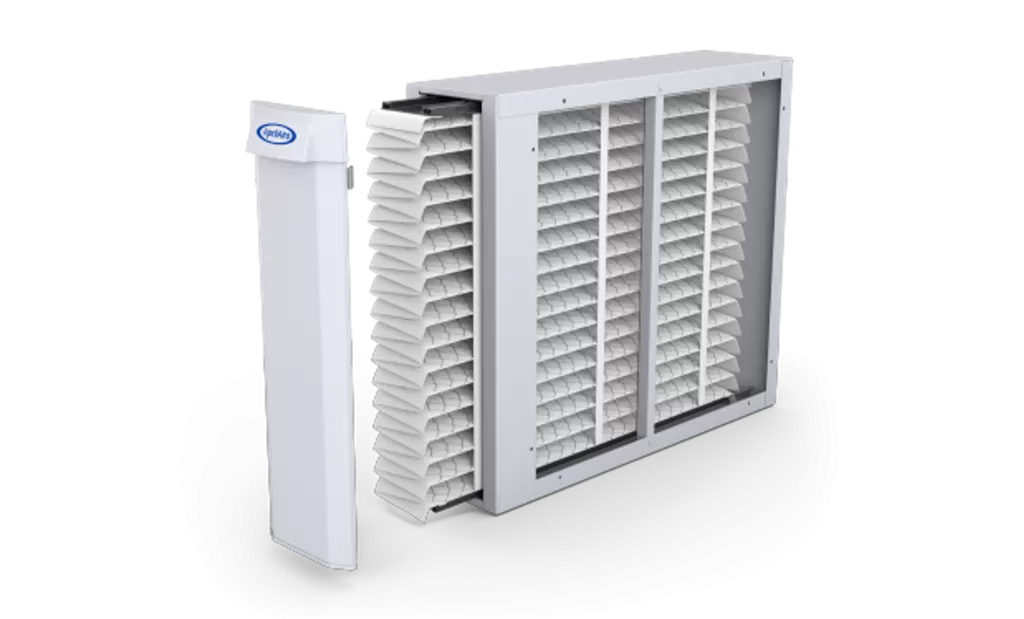
Most homes have the filter in one of three places: a slot in the side of the furnace or air handler next to the blower, behind a return-air grille on a wall, ceiling or floor, or in a rack where the return duct meets the furnace. If you see a rectangular opening with a cover and no filter, look at the next return grille. Some homes have more than one.
Step 2
Turn the system off
Set the thermostat to Off and wait for the blower to stop. Pulling a filter while the fan runs sucks loose dust into the system and the room. You do not need to touch the breaker for a filter change.
Step 3
Slide out the old filter and read its frame
The size is printed on the cardboard edge, for example 16 x 25 x 1, along with an arrow that shows the airflow direction. Take a photo of it with your phone, or take the old filter with you to the store. Stack it flat so loose dust stays on it.
Step 4
Check the old filter and wipe the slot
Hold it up to a light. If you cannot see light through it, it was due. A filter that is full of pet hair, dust or lint tells you to check it more often. Wipe the opening with a dry cloth or run a vacuum hose along it so the new filter does not start out dirty. Do not let anything fall into the blower compartment.
Step 5
Match the new filter
Buy the same length, width and thickness printed on the old frame. A filter that is even a half inch small lets air go around it, and dust gets straight to the coil and blower. For most homes a MERV 8 to 11 pleated filter is a good balance of cleaning and airflow. A very dense filter in a system that was not designed for it can choke airflow, so ask us before you go higher.
Step 6
Slide the new filter in with the arrow pointing the right way
The arrow should point toward the furnace or air handler and away from the return duct, which means the air flows in the direction of the arrow. In a return-air grille, the arrow points into the wall or ceiling, toward the duct. It should sit flat and snug with no gaps at the edges, and it should not bend or buckle.
Step 7
Close it up and turn the system back on
Put the cover or grille back and make sure it seats fully. Some furnaces will not run if the blower door is loose. Return the thermostat to Heat or Cool and listen for a minute. A new filter should not whistle or rattle.
Step 8
Write the date and set a reminder
Mark the date on the frame with a marker, and set a phone reminder for the next change. Fall and spring are good times to check, and our maintenance visits include a filter check, so you always have a second set of eyes on it.
How Often Should You Change It?
Every 1 to 3 months
1-inch pleated filters
The common size in homes. Change every month in summer and winter if you run the system heavily, or every three months in mild seasons.
Every 6 to 12 months
4 to 5-inch media filters
Thicker filters hold more dust and last longer. Check them twice a year and change them when they are gray and loaded.
Every month
Homes with extra dust
Pets, allergies, smokers, recent remodeling or a dusty street all shorten the life of a filter. Check it monthly and change it when it looks full.
Common Mistakes to Avoid
- Running the system with no filter at all, even for a short time.
- Putting the filter in backward, with the arrow pointing at the room instead of the furnace.
- Using a filter that is slightly too small, which lets air and dust go around it.
- Buying the densest MERV rating without checking that your system can handle the airflow.
- Forgetting a second filter. Some homes have one at the furnace and another at a return grille.
When to Call Us Instead
Changing a filter is a homeowner job. These signs mean the problem is bigger than the filter.
- You cannot find the filter, or there is no filter slot anywhere.
- The filter is dirty again within a few weeks, which can point to duct leaks or a bigger dust source.
- You see ice on the indoor coil or lines, water around the furnace or air handler, or a burning smell.
- The system short cycles, blows weak air or runs constantly even with a clean filter.
- The filter was missing for a long time and the blower or coil looks coated in dust.
Call (847) 224-2420 for help, or see AC repair and furnace repair.
Air Filter Questions
What happens if I never change my air filter?
A clogged filter restricts airflow. The furnace can overheat and shut off, the air conditioner coil can freeze, energy use goes up, and dust builds up on parts that are hard to clean. Over time it shortens the life of the equipment. If the system has already stopped cooling or heating, see AC repair or furnace repair.
Which way does the arrow on the air filter point?
Toward the furnace or air handler and away from the return duct. The air should flow in the direction of the arrow. If you install it backward, the filter works poorly and can collapse.
Can I wash and reuse my air filter?
Only if it is designed to be washable, and then only as the manufacturer directs. It must be completely dry before it goes back in. Standard pleated and fiberglass filters are disposable and should be replaced, not washed.
Does a higher MERV filter always clean the air better?
No. A higher MERV rating catches smaller particles, but a dense filter also restricts airflow, and not every system is built for that. If you want better filtration, ask us about a matched media filter or other indoor air quality options instead of just buying the densest filter on the shelf.
Let Us Keep an Eye on It
Our maintenance plan includes spring and fall tune-ups, so a technician checks your filter, coils and safety controls twice a year. Call any time, or book online in about a minute.
See the maintenance plan, what an AC tune-up includes, when to schedule a fall furnace tune-up, our homeowner HVAC FAQ and HVAC glossary.
