
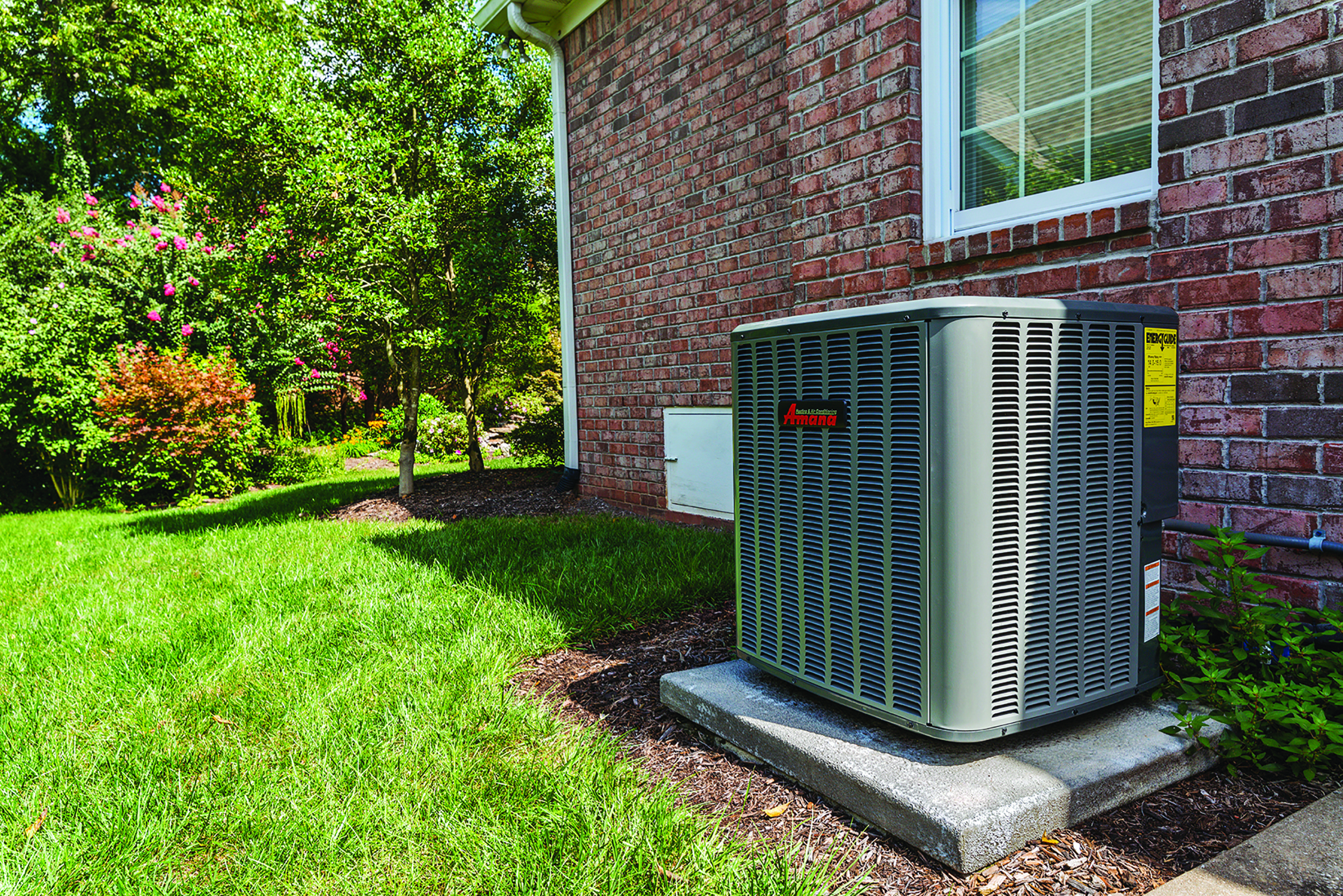
A real AC tune-up is a set of measurements and cleanings that tell you whether the system will make it through August: cleaned coils, refrigerant charge verified by superheat and subcooling, the capacitor and contactor tested under load, the condensate drain cleared, static pressure and temperature split recorded. Done in May, on a mild day, it turns a July breakdown into a scheduled part swap. Here is what that visit actually involves, and why the first week of May is the best time on the calendar to book it.
What We Actually Do on an AC Tune-Up
Plenty of companies sell a “tune-up” that amounts to hosing off the outdoor unit and glancing at the filter. Ours is closer to a physical. Every AC maintenance visit in Elgin and the Fox Valley follows the same checklist, and every measurement goes on the report you keep. The point is not to make the system look clean; it is to catch the part that is drifting out of spec while it is still a cheap, scheduled fix.
Outdoor unit
Condenser coil cleaning
The condenser sheds the heat your AC pulled out of the house. After a Fox Valley spring it is packed with cottonwood fluff, grass clippings and dust, and a coated coil runs hotter, raises head pressure and shortens compressor life. We clean it from the inside out with coil cleaner and a rinse, and check that fins are straight enough to pass air.
Indoor unit
Evaporator coil and blower inspection
The indoor coil is where cooling and dehumidification happen. We inspect it for dirt, biological growth and any sign of oil that would point to a refrigerant leak, and check the blower wheel for buildup that steals airflow. A heavily fouled indoor coil is a separate cleaning job we will quote rather than skip past.
Refrigerant
Charge verified by superheat and subcooling
We do not “top off” refrigerant by feel. On a fixed-orifice system we calculate superheat; on a TXV system we measure subcooling against the manufacturer’s target. Both use the actual outdoor and indoor conditions that day. A charge that is off by even a small amount costs efficiency, and a charge that is low means there is a leak to find, not a can to add.
Electrical
Capacitor and contactor tested under load
The run capacitor is the single most common summer failure we see. We measure its microfarad rating against the label and replace it when it has drifted out of tolerance, before it strands the compressor on a 92-degree day. The contactor is checked for pitted contacts and a sticking coil; the disconnect, wiring and amp draws on the compressor and fan motor are recorded.
Water
Condensate drain and float switch
A humid Elgin summer pulls gallons of water a day out of the air, and all of it leaves through one small drain. We clear the trap and line, confirm it drains, and test the float switch that shuts the system down before an overflow soaks the furnace or the finished basement below.
Airflow
Static pressure and temperature split
Total external static pressure tells us whether the duct system, filter and coil are letting the blower move the air the equipment needs. The temperature drop across the coil, typically 15 to 20 degrees on a system that is charged and breathing properly, confirms the whole thing is working as a system. Both numbers go on the report so we can compare next year.
We finish by checking the thermostat’s cooling settings, the filter, the refrigerant line insulation, the outdoor unit’s level and clearance, and by cycling the system to confirm it starts, runs and shuts down cleanly. Heat pumps get the same visit with a few additions; see heat pump maintenance for the differences.
Why the First Week of May Beats the Middle of July
Three reasons, and the weather is only one of them.
- Mild days make honest measurements. Superheat and subcooling targets depend on outdoor and indoor conditions, and a 70-degree May afternoon gives us a clean read before the system has run hard. In July, we are often measuring a system that has already been struggling for weeks.
- Parts get replaced on your schedule, not the heat’s. A capacitor reading 15% low in May is a 10-minute swap on a scheduled visit. The same capacitor in July fails at 4 p.m. on the hottest day of the year, when the entire Fox Valley is calling at once.
- The calendar fills fast after Memorial Day. Once the first stretch of 85-degree days hits, tune-up appointments compete with no-cool repair calls, and repairs come first. Booking in early May means you pick the day.
If you are reading this in July with a system that has never been serviced, it is still worth doing. A tune-up in July catches the same problems; it just catches them with less margin. The one thing we will not do on a tune-up is ignore a system that is already failing. If the compressor is drawing locked-rotor amps or the charge is far off, the visit becomes an AC repair diagnosis, and we tell you that before we go further.
What a Tune-Up Catches (and What It Doesn’t)
Homeowners sometimes expect a tune-up to guarantee a breakdown-free summer. It does not, and we would rather be clear about that than oversell it. Here is where it earns its keep and where it can’t.
| Problem | Tune-up catches it? | What happens next |
|---|---|---|
| Weak run capacitor | Yes, by measured microfarads | Replaced on the spot, before it strands the compressor |
| Pitted or sticking contactor | Yes, by inspection | Replaced on the spot or scheduled |
| Low refrigerant charge | Yes, by superheat/subcooling | Leak search quoted as a repair; we do not just add refrigerant |
| Dirty condenser coil | Yes, and it is cleaned | Included in the visit |
| Clogged condensate drain | Yes, and it is cleared | Included in the visit |
| High static pressure | Yes, by measurement | Filter, duct or coil fix quoted separately |
| Failing compressor windings | Sometimes, by amp draw and megohm test | Repair-vs-replace conversation |
| Sudden fan motor failure in August | Not always | Bearings can go with little warning; the tune-up checks amp draw and noise |
When a tune-up does turn up a repair, the pricing works the same way as any other call: a flat-rate price for the fix, approved before we start. Common AC parts such as capacitors, contactors and fan motors typically run $300 to $1,400 in our area, parts and labor. Leak repairs and compressors are the expensive end and usually start a conversation about AC replacement instead.
The $240 Maintenance Plan Math
A single AC tune-up is a good buy. The semi-annual maintenance plan is a better one, and the math is simple enough to do on the back of the invoice.
- Spring AC or heat pump tune-up, everything above, up to a $130 value.
- Fall furnace or air handler tune-up, the heating-side equivalent, up to a $130 value. See furnace maintenance for what that one covers.
- One free business-hours service call during the year, so one no-cool call in July is already covered.
- Priority scheduling when the heat wave hits and everyone is calling.
- 5% off services on any repair we do while you are a member.
Add it up and the plan delivers up to $390 in services for $240 a year, before the 5% discount or the priority scheduling does anything for you. For a household with a 10-year-old air conditioner and a 15-year-old furnace, that is the cheapest insurance we sell. And if the tune-up does reveal that the system is near the end, a free written replacement quote and financing you can prequalify for in about 2 minutes with no impact to your credit score are both on the table the same day.
What You Can Do Before We Arrive
A few things make the visit faster and the readings more useful.
- Replace or clean the filter if it has been more than 90 days. A clogged filter throws off static pressure and temperature split, and we would rather measure the system as it will actually run.
- Clear 2 feet around the outdoor unit: shrubs, mulch bags, the grill cover that blew over in April.
- Make sure we can reach the indoor unit, the electrical panel and the thermostat.
- Write down anything you noticed last summer: a room that never cooled, a noise on startup, a puddle by the furnace. Those notes point us at the right measurement.
The whole visit usually runs an hour to an hour and a half for a single system, longer if the condenser coil is badly fouled or there are two systems. You get a written report with every reading, and a straight answer about whether anything needs attention before summer. Browse our air conditioning services for the rest of what we do on the cooling side.
Book Your Spring AC Tune-Up Before the Calendar Fills
Early May is the sweet spot: mild weather for accurate readings, open scheduling, and time to fix anything we find before the first heat wave. Schedule a standalone AC tune-up or start the $240 maintenance plan and get the fall furnace visit included.
Already have a system that is not cooling? Skip the tune-up and go straight to AC repair, or emergency AC repair if it is after hours.
AC Tune-Up FAQs
What does an AC tune-up include?
Cleaning the outdoor condenser coil, inspecting the indoor coil and blower, verifying refrigerant charge by superheat or subcooling, testing the capacitor and contactor, clearing the condensate drain and testing the float switch, and measuring static pressure and temperature split. You get a written report with every reading.
When is the best time to schedule an AC tune-up in Elgin?
Late April through mid May. The weather is mild enough for accurate refrigerant readings, the schedule is open, and any part we find drifting out of spec can be replaced before the first heat wave in June.
How long does an AC tune-up take?
Usually an hour to an hour and a half for one system. A badly fouled condenser coil, a second system or a heat pump adds time.
Does a tune-up include adding refrigerant?
No. We measure the charge by superheat or subcooling and tell you if it is low. A low charge means there is a leak, and adding refrigerant without finding it is money spent on a problem that comes right back. A leak search is quoted as a repair for you to approve.
Is the $240 maintenance plan worth it?
It includes a spring AC or heat pump tune-up and a fall furnace or air handler tune-up, each up to a $130 value, plus one free business-hours service call, priority scheduling and 5% off services. That is up to $390 in services for $240 a year.
What if the tune-up finds a problem?
We give you a flat-rate repair price and you approve it before we do anything. Common AC parts such as capacitors, contactors and fan motors typically run $300 to $1,400 in our area; many are replaced on the same visit.
Schedule Your AC Tune-Up in Elgin and the Fox Valley
Call or book online and we’ll confirm an arrival window. Every reading goes on a report you keep.
Want both seasons covered? See the $240 semi-annual maintenance plan.
Share this post
