
HVAC Glossary
HVAC Terms Explained in Plain English
Efficiency ratings, equipment parts, thermostat settings and refrigerants, defined the way we explain them at your kitchen table. Can’t find a term? Call and ask.
Jump to a Topic
Efficiency and Capacity
The numbers on the label, and what they say about cost and performance.
AFUE
Annual Fuel Utilization Efficiency is the share of the fuel a furnace or boiler burns that ends up as heat in your home. At 95 percent AFUE, about 95 cents of each fuel dollar heats the house.
SEER2
A rating of how efficiently an air conditioner or heat pump cools over a whole season. It uses the newer, tougher test method, so SEER2 numbers run a little lower than the older SEER numbers for the same equipment. Higher is better.
HSPF2
The heating counterpart to SEER2 for heat pumps. It rates how much heat the system delivers for the electricity it uses across a heating season. Higher is better.
BTU
British thermal unit, a measure of heat. Furnace and boiler output is given in BTUs per hour. It describes how much heat the equipment can make, not how efficiently it makes it.
Ton
A cooling capacity unit equal to 12,000 BTUs per hour. A 3-ton air conditioner can remove 36,000 BTUs of heat per hour. A ton here has nothing to do with weight.
Load calculation
The room-by-room math that sizes a heating and cooling system to your actual house, using insulation, windows, ducts and layout. It replaces the old habit of sizing by square footage or copying the existing unit.
AHRI-matched system
An outdoor unit, indoor coil and furnace or air handler that the industry has tested together as one combination. The efficiency number on the label applies only to the matched set.
ENERGY STAR
A government-backed label for equipment that meets set efficiency levels. Many utility discounts and rebates require it. See our financing options and rebate pages for current programs.
MERV
Minimum Efficiency Reporting Value, a 1 to 16 scale for how well a filter catches particles. Higher numbers catch smaller particles but can restrict airflow, so match the filter to what your blower can handle.
Single-stage, two-stage and variable-speed
A single-stage system runs at full output or not at all. A two-stage system has a low and a high setting. A variable-speed system adjusts in small steps, which tends to mean steadier temperatures and quieter operation.
Heating and Cooling Equipment
The main pieces of a system and what each one does.
Furnace
Heats air and sends it through ducts. A gas furnace burns fuel in burners, passes the heat to a heat exchanger and uses a blower to move your household air across it. See furnace repair and furnace replacement.
Condensing (high-efficiency) furnace
A furnace rated around 90 to 98 percent AFUE that has a second heat exchanger to pull more heat from the exhaust. The exhaust cools enough to make water, so it needs a condensate drain and plastic vent pipe.
Heat exchanger
The metal part inside a furnace that heats up from the flame and passes heat to your household air without mixing with the combustion gases. A cracked heat exchanger is a safety problem.
Heat pump
An electric system that moves heat instead of making it. A reversing valve lets it cool the house in summer and heat it in winter. See heat pump repair.
Dual-fuel system
A heat pump paired with a gas furnace. The heat pump does most of the heating, and the furnace takes over when it gets very cold outside.
Air handler
The indoor cabinet that holds the blower and the indoor coil, and sometimes electric heat strips. It is the indoor half of a heat pump or air conditioner when there is no gas furnace.
Evaporator coil
The indoor coil where refrigerant absorbs heat from your air. It sits on top of or inside the furnace or air handler and collects moisture, which drains away.
Condenser (outdoor unit)
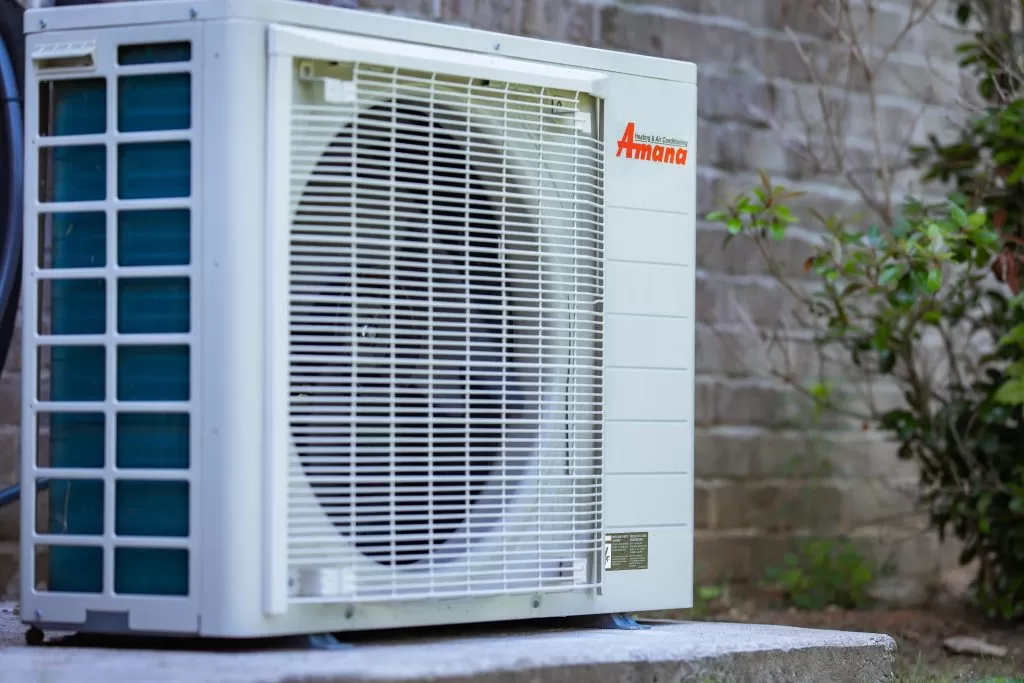
The outdoor part of an air conditioner or heat pump. It holds the compressor and the coil that releases heat outside.
Compressor
The pump of the refrigeration cycle. It squeezes refrigerant gas to raise its pressure and temperature so the system can move heat.
Boiler
Heats water or makes steam and sends it to radiators, baseboards or in-floor tubing. A different system from a furnace, with no ducts for heating. See our heating services.
Ductless mini-split
A heat pump with an outdoor unit and one or more wall, floor or ceiling units inside, connected by a small line set instead of ducts. Good for additions, garages and rooms without ductwork.
Ductwork
The metal or flexible channels that carry heated and cooled air to each room. Leaks, poor sizing and blockages often cost more comfort and energy than the equipment itself.
Thermostats and Controls
Settings and modes you will see on a thermostat, and what they do.
Auxiliary (aux) heat
The automatic backup heat on a heat pump system. Electric heat strips, or the gas furnace in a dual-fuel system, switch on when the heat pump cannot keep up.
Emergency heat
A manual mode that turns the heat pump off and runs only the backup source. It is for when the outdoor unit has stopped working, not for everyday use.
Defrost cycle
A short period in winter when a heat pump reverses to melt frost from the outdoor coil. You may see steam from the unit and hear a change in sound. It is normal. See how heat pumps work in northern Illinois winters.
Setback
Lowering the heating setpoint (or raising the cooling setpoint) while you sleep or are away. Moderate setbacks save energy. Very deep ones on a heat pump can trigger expensive backup heat.
Geofencing
A smart thermostat feature that uses your phone’s location to switch to an away setting when you leave and back to comfort when you return.
Smart thermostat
A Wi-Fi thermostat you can run from an app, with schedules, away modes and alerts. Amana smart thermostats use the SkyportHome app, which replaced the earlier Amana Home and Daikin One Home apps. See smart thermostat installation. Amana owners can use our smart thermostat help center.
Zoning
Splitting the home into areas, each with its own thermostat and a damper in the ducts, so rooms or floors can be heated and cooled separately.
Short cycling
When equipment turns on and off in short bursts instead of running full cycles. Common causes include a clogged filter, an oversized system or a failing part. It wears out equipment and wastes energy.
Refrigerants
The fluid that carries heat in an air conditioner or heat pump.
Refrigerant
The fluid that absorbs heat indoors and releases it outdoors in the cooling cycle. It is not used up, so a system that is low on refrigerant has a leak.
R-22 (Freon)
The older refrigerant in most air conditioners built before about 2010, also called HCFC-22 or by the brand name Freon. It harms the ozone layer, so U.S. production and imports ended January 1, 2020. Systems can keep running, but the supply is reclaimed or stockpiled refrigerant, so repairs get costly.
R-410A
The refrigerant used in most residential air conditioners and heat pumps made over the last two decades. Existing R-410A systems can keep running, and the refrigerant is still available for service. It is an A1 refrigerant.
R-32
The refrigerant in many new air conditioners and heat pumps, including the Amana S-Series systems we install. It is a single compound that carries heat efficiently and has a lower global warming impact than R-410A. It is an A2L refrigerant.
R-454B
A newer low-impact refrigerant, a blend of R-32 and a second compound, used by several brands in new air conditioners and heat pumps. Its global warming potential is about 466, roughly 78 percent below R-410A. It is an A2L refrigerant and is not interchangeable with R-410A or R-32.
A1
The refrigerant safety class for lower toxicity and no flame spread in testing. The A is toxicity and the 1 is flammability. R-22 and R-410A are A1 refrigerants.
A2L
A safety class for refrigerants that are mildly flammable: hard to ignite and slow to burn. R-32 and R-454B are A2L refrigerants, and equipment that uses them is designed and installed for that class. Compare A1.
Indoor Air Quality
Filters, humidity and air cleaning.
Air filter
A pleated or media panel in the furnace or air handler that catches dust and protects the equipment. Replace it on schedule. See how to change your air filter.
Whole-home air purifier
A cleaner built into your ductwork that treats the air passing through the system, with a replaceable media filter in the cabinet. We install AprilAire models. See air purifier installation.
Whole-home humidifier
Adds moisture to dry winter air through the furnace or air handler. Helpful in Illinois winters when heated air gets very dry.
Whole-home dehumidifier
Removes excess moisture from the whole house, which helps with muggy summers, basements and mold risk.
Relative humidity
The amount of moisture in the air compared with the most it could hold at that temperature. Many people find 30 to 50 percent comfortable, with the lower end in the coldest weather.
Service and Safety
Words you will hear on a service visit.
Tune-up
A scheduled inspection and cleaning of a heating or cooling system to catch worn parts and restore performance. Our semi-annual maintenance plan covers both seasons.
Condensate
Water that forms when moist air cools or when a high-efficiency furnace cools its exhaust. It must drain freely. A blocked drain can shut equipment down.
Flame sensor
A small rod in a gas furnace that confirms the burner has lit. When it gets dirty the furnace may light and then shut off a few seconds later.
Capacitor
A small electrical part that gives motors and compressors a boost to start and run. A weak capacitor is one of the most common air conditioner repairs.
Carbon monoxide (CO)
A colorless, odorless gas made by incomplete burning of fuel. Working CO detectors on every level are essential. If an alarm sounds, leave the house and call 911 or your gas utility.
Questions About Your System?
Call any time, or book a repair, tune-up or free quote online in about a minute.
See our homeowner HVAC FAQ, explore our heating and cooling services and request a free quote.
