
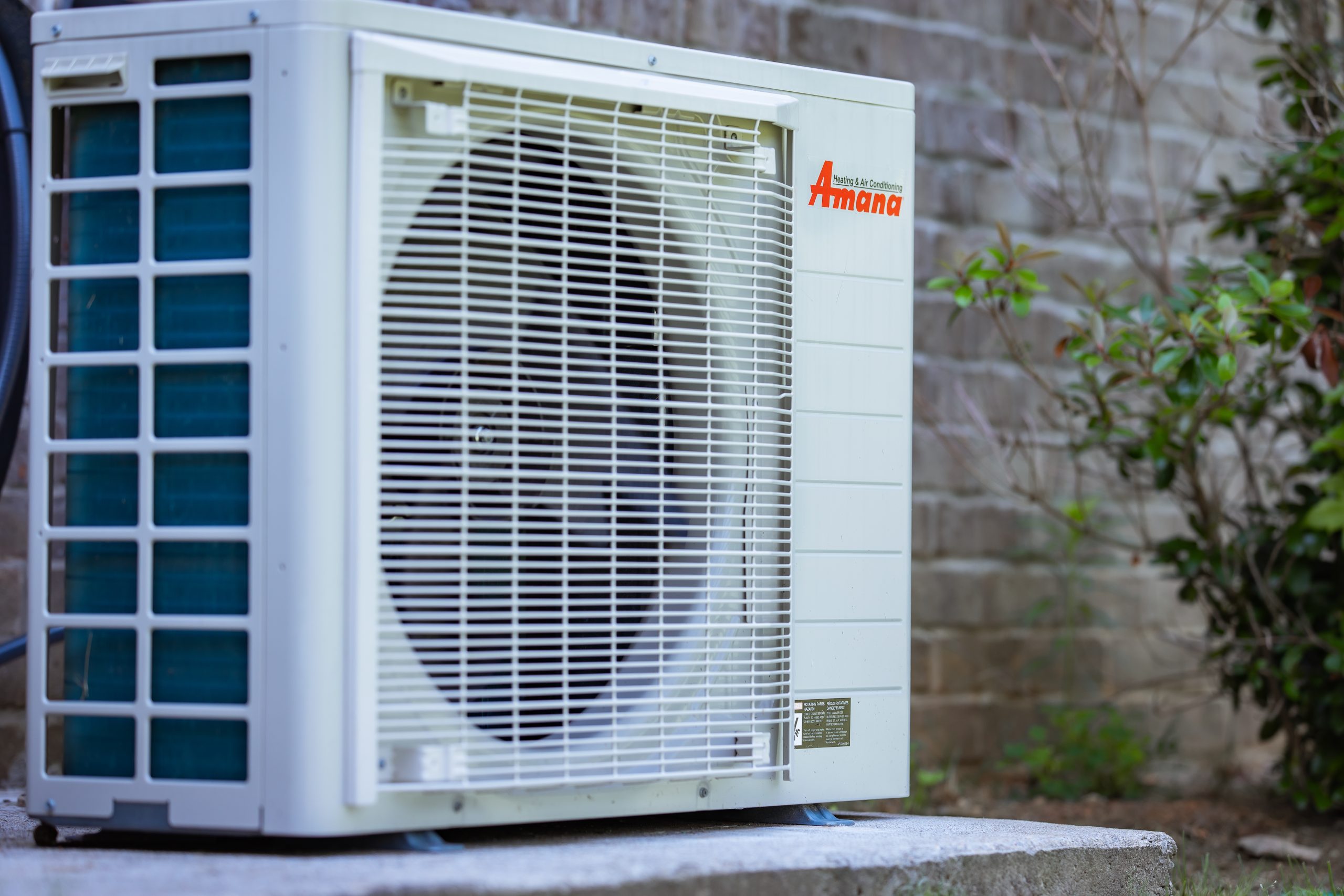
Yes. A cold-climate inverter heat pump keeps heating an Elgin home at 0°F and below, as long as it’s sized to the heating load and installed correctly. What most Fox Valley homeowners actually end up with is a dual-fuel system: the heat pump carries the house through fall, spring and most of winter, and the gas furnace takes over on the handful of nights when it’s cheaper or safer to burn gas. Here’s how it works and how to tell if your house is a good fit.
How a Heat Pump Heats When It’s 0°F Outside
A heat pump doesn’t make heat, it moves it. Even at 0°F there’s heat energy in outdoor air. The refrigerant in the outdoor coil is colder than that air, so it absorbs heat, gets compressed to a much higher temperature, and releases it into your ductwork. It’s your air conditioner run in reverse.
Older heat pumps earned their bad reputation up here because of the compressor. A single-stage compressor runs at one speed, and its output falls off a cliff as the outdoor temperature drops. A cold-climate unit like the Amana S-Series R-32 uses an inverter-driven compressor that speeds up as it gets colder, a dimmer switch instead of an on/off switch, so capacity holds up instead of collapsing.
Capacity versus temperature in plain terms: a cold-climate rated unit is tested for its heating output at 5°F, not just at the mild 47°F number on the spec sheet, and a good one keeps producing useful heat well below zero. The old single-stage models gave up around 25°F to 30°F, which in Elgin is a normal January afternoon. Elgin’s design temperature, the outdoor temperature we size heating equipment for, is near 0°F, so we won’t install a heat pump here that hasn’t been rated at 5°F. Every heat pump installation starts with that math.
The Steam Coming Off the Outdoor Unit Is Normal
The first damp, cold morning after a heat pump goes in, we usually get a call: the outdoor unit stopped, the fan quit, and there’s a cloud of steam rolling off it. That’s a defrost cycle, and it’s supposed to happen.
When the outdoor coil is below freezing and the air is humid, frost builds on it like a freezer wall. Frost chokes airflow, so the unit briefly reverses itself, sends hot refrigerant through the outdoor coil, melts the frost, and goes back to heating. The fan pauses so it isn’t blowing cold air across the coil, and the steam is the melting frost flashing off. It’s over in a few minutes.
What isn’t normal: a block of ice that never clears, a base pan frozen solid, or defrost running back to back all day. Those point to a low charge, a defrost sensor or control fault, or a unit set on the ground with nowhere for meltwater to go. That’s a heat pump repair call, not a design flaw, and a fall heat pump maintenance visit checks defrost operation before it matters.
The Balance Point, and Why Most Fox Valley Homes Go Dual-Fuel
Every house has a balance point: the outdoor temperature where the heat pump’s output exactly matches what the house is losing. Above it, the heat pump has capacity to spare. Below it, something has to help. On a cold-climate unit sized to the heating load, that point is well below freezing.
There’s a second balance point that matters more to your wallet. As it gets colder, a heat pump works harder for each unit of heat, and at some outdoor temperature it becomes cheaper to burn natural gas than to run the heat pump. Where that lands depends on your electric rate, your gas rate and the unit’s efficiency, and it moves when rates move.
That’s why dual-fuel is the setup we install most often in the Fox Valley. The heat pump replaces your air conditioner and handles heating from October through most of the winter. A high-efficiency gas furnace sits under it as the indoor unit and takes over below the balance point we program into the thermostat with an outdoor sensor. On the coldest nights you’re on gas; the rest of the time you’re on the cheaper heat pump, and nobody in the house notices the handoff.
If the furnace is also due, a new one goes in on the same job: the Nicor Gas discount applies to the furnace and the ComEd discount to the heat pump. See furnace installation for that side of the work.
All-Electric With Heat Strips vs. Dual-Fuel
Both work in northern Illinois. Which one fits depends on what’s in the basement now, what’s in the electrical panel, and how you want the winter bills to behave.
Option A
All-electric: heat pump + air handler with heat strips
The indoor unit is an air handler with electric resistance strips as backup for the coldest nights. Strips are simple and reliable, but resistance heat is the most expensive heat there is, so the heat pump has to be sized so they barely run. Usually needs a larger dedicated circuit and a panel check. Best fit for homes without gas service, or owners who want gas out of the house.
Option B
Dual-fuel: heat pump + high-efficiency gas furnace
The furnace is the indoor unit and the backup, and the thermostat switches to gas below the balance point. Backup heat is cheap and fast, electrical needs are modest. Best fit for the typical Fox Valley home that already has a gas furnace in the basement, especially if the furnace or AC is due anyway.
Either way
What both need
Sizing to the house’s heating load, a cold-climate rated inverter unit, an AHRI-matched indoor unit, a weighed refrigerant charge, and a thermostat set up for a heat pump. Skip any of those and the system runs, just expensively.
What Changes on Your Electric and Gas Bills
We don’t publish savings numbers because they depend on your house, your rates and the setup. But the shape of the change is predictable.
- Electric bill goes up in the heating months. The heat pump is doing work your furnace used to do, and in fall and spring it carries the whole load.
- Gas bill drops. On dual-fuel the furnace only runs below the balance point, so gas use shrinks to the coldest stretches. On all-electric it goes away.
- Summer bills usually go down. An inverter heat pump is also a variable-speed, high-efficiency air conditioner, so replacing a 15-year-old AC typically lowers cooling costs.
- Judge the total. Look at electric plus gas across a full year, not one January bill. A thermostat with no outdoor sensor and aux heat free to run whenever it likes will erase the savings, which is why commissioning matters as much as the equipment.
If the upfront cost is the sticking point, financing lets you prequalify in about 2 minutes with no impact to your credit score.
Sizing to the Heating Load, Not the Old AC’s Tonnage
The most common mistake we see on heat pumps other contractors installed is sizing. Air conditioners are sized to the cooling load. In northern Illinois the heating load is the bigger number, so a heat pump that simply replaces a 3-ton AC one-for-one often runs short of heat in January and leans on expensive backup.
We size to the house: square footage, windows, insulation, air leakage, ceiling heights and duct location, with a full Manual J load calculation when it’s needed, requested or required (it may carry an additional cost). That gives a heating load in BTUs at Elgin’s near-0°F design temperature, and we pick the unit by its rated heating capacity at 5°F and 17°F, not its cooling tonnage. The inverter compressor keeps that from oversizing the cooling side, because it throttles down in summer and still pulls humidity out of the air.
Heating capacity also sets your ComEd instant discount tier. Qualifying ducted heat pumps earn $900 to $2,000 off the invoice depending on efficiency tier and heating capacity, with the full $2,000 on a ducted unit of 2.5 heating tons or more, and a qualifying ENERGY STAR smart thermostat we install adds $75. It requires AHRI-matched equipment and a refrigerant of 700 GWP or less, which R-32 meets. As a ComEd Heat Pump-Trained Contractor we take it off the invoice, no application. St. Charles, Geneva and Batavia run their own electric utilities, so ComEd discounts aren’t available there.
Signs Your Home Is a Good Heat Pump Candidate
Most 1960s to 2000s split-levels and ranches in the Fox Valley check enough of these boxes.
- Your air conditioner is 12 or more years old. You’re replacing the outdoor unit anyway, and a heat pump is the same box with a reversing valve and a smarter compressor.
- You have a gas furnace in decent shape. It becomes the dual-fuel backup, so no heat strips or panel upgrade.
- Your furnace is also due. Two discounts on one job: ComEd on the heat pump, Nicor Gas on the high-efficiency furnace.
- Your ductwork is in reasonable condition. Leaky or undersized ducts can be fixed, but it’s better to know before the quote.
- You’re on ComEd. That’s most of our service area outside St. Charles, Geneva and Batavia.
- Your electrical panel has room. Dual-fuel usually needs just the outdoor unit circuit; all-electric with strips needs more.
- You’re keeping the house a while. The efficiency gains pay back over years, not months.
Not sure? Request a free written quote. We measure the house, check the panel and ductwork, and show you the heating load and discount tier before you decide anything. More on our heat pumps page.
Ready to See the Numbers for Your House?
We install cold-climate Amana S-Series R-32 heat pumps and dual-fuel systems across Elgin and the Fox Valley, sized to the house’s heating load. See what goes into a heat pump installation.
Already have a heat pump that isn’t keeping up? Start with heat pump repair, or keep it tuned with the semi-annual maintenance plan.
Heat Pumps in Northern Illinois: FAQs
Do heat pumps work below zero in Illinois?
Cold-climate inverter heat pumps do. They’re rated for heating output at 5°F and keep producing useful heat below zero. We size them to the house’s heating load at Elgin’s near-0°F design temperature, and most homes here pair one with a gas furnace for the coldest nights.
What is a cold-climate heat pump?
A heat pump with an inverter-driven compressor that speeds up as the outdoor temperature drops, so its heating capacity holds up in cold weather. It’s tested and rated at 5°F, not just at 47°F like older single-stage units.
Why does my heat pump blow steam and stop in the winter?
That’s a defrost cycle. Frost builds on the outdoor coil in cold, damp air, so the unit briefly reverses to melt it, the fan pauses, and the melting frost steams off. It lasts a few minutes and is normal. Ice that never clears is not, and that’s a repair call.
What is the balance point on a dual-fuel system?
The outdoor temperature where the thermostat switches from the heat pump to the gas furnace. We calculate it from the heat pump’s capacity, your electric and gas rates and the home’s heat loss, then program it with an outdoor sensor. Most homes here land somewhere between 15°F and 30°F.
Will a heat pump raise my electric bill?
In the heating months, yes, because the heat pump is doing work the furnace used to do. Your gas bill drops at the same time, and summer cooling costs usually fall. Judge it on electric plus gas across a full year, not one winter bill.
Can I replace just my air conditioner with a heat pump and keep my furnace?
Yes. That’s a dual-fuel system, and it’s the most common setup we install in the Fox Valley. The heat pump takes the AC’s place outside, the furnace stays as the indoor unit and backup, and the thermostat manages the handoff.
Get a Free Heat Pump Quote
We’ll size the system to your house, show you the heating capacity at 5°F, and write up the price with the ComEd discount included. Call or book online.
Request a free quote, see financing options or learn about dual-fuel systems.
Discount amounts reflect the 2026 ComEd Energy Efficiency Program for qualifying equipment and are subject to change or cancellation due to funding limits. Rest Assured HVAC LLC is an independent contractor and is not affiliated with or endorsed by ComEd.
Share this post
