
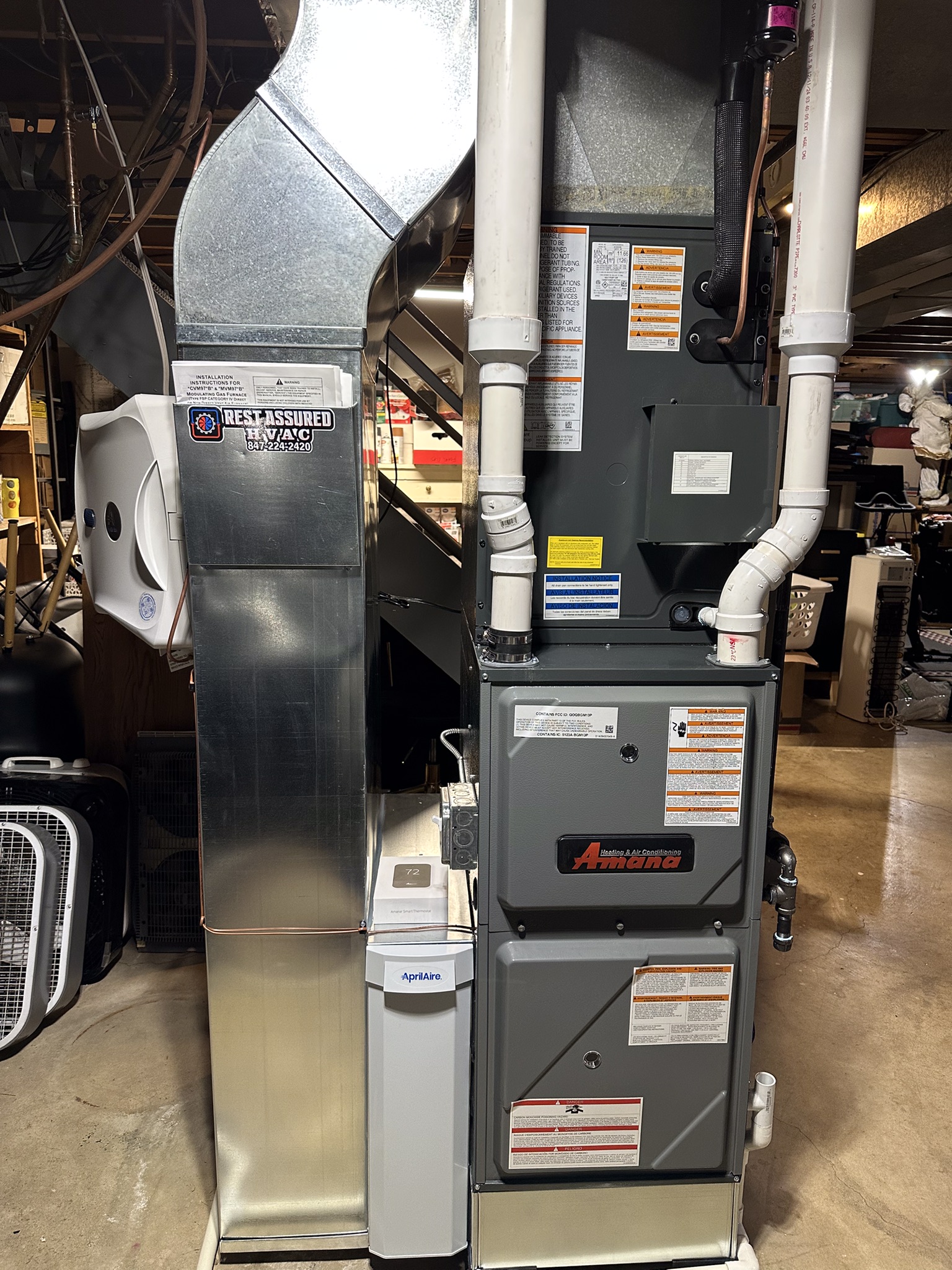
A gas furnace makes carbon monoxide every time it runs. That is normal; the job of the heat exchanger and the venting is to carry it outside, and on a well-maintained furnace they do. Problems start when the heat exchanger cracks, the vent fails, or the burners are starved for air. By mid-February a Fox Valley furnace has been running hard for three months and has a few more to go, so this is a good week to walk through the checklist: working detectors, what to look for at the furnace, and what a combustion test on a tune-up actually measures. No scare tactics, just the things that matter.
Start With Detectors, Not the Furnace
Carbon monoxide is colorless and odorless, and the early symptoms (headache, nausea, dizziness, fatigue) look like the flu that is going around in February. A detector is the only reliable warning you will get, and it is also the cheapest item on this list. Illinois law requires a CO alarm within 15 feet of every sleeping area in homes with fuel-burning appliances or an attached garage. We recommend going a step further.
- One on every level of the house, including the basement where the furnace and water heater live.
- One near each sleeping area, in the hallway outside the bedrooms, so it wakes you up.
- Test monthly, replace batteries twice a year, and replace the whole unit at the age printed on the back, typically 5 to 10 years. Sensors wear out even when the test button still beeps.
- Know the plan. If an alarm sounds, everyone goes outside, you call 911 from outside, and nobody goes back in until the fire department clears the house. Then call us to find the source.
If you smell gas rather than hear an alarm, the rule is different and just as firm: leave the house right away, call 911 from outside, and call your gas utility’s emergency line from outside before calling us.
What a Cracked Heat Exchanger Is, and Why It Matters
The heat exchanger is the metal chamber inside the furnace where the burner flames live. Combustion gases, including carbon monoxide, travel through the inside of it and out the vent. Your household air travels across the outside of it, picks up heat, and goes to the ducts. The two streams are never supposed to meet.
Years of heating and cooling cycles flex that metal thousands of times a season. Eventually it can crack, usually at a seam or a bend, and combustion gases mix with the air the blower is pushing into your bedrooms. A furnace that has overheated repeatedly from a clogged filter gets there sooner. Cracks are often hairline and invisible from the front; the cell has to be inspected with a camera and mirrors, or a combustion test that shows the blower disturbing the flame. A cracked heat exchanger is almost always the point where the conversation moves to furnace replacement, because the part is expensive, the labor is most of a day, and a furnace old enough to crack one is usually old everywhere else.
Warning Signs You Can See From the Furnace Room
None of these prove there is a CO problem, but each one is a reason to shut the furnace down at the switch and call rather than keep running it.
Flame color
Yellow or orange burner flames
A gas furnace should burn with steady blue flames, perhaps with small yellow tips. Lazy, yellow or orange flames mean incomplete combustion, which produces far more carbon monoxide. Common causes are dirty burners, a blocked air intake, or the wrong gas pressure.
Rust and soot
Soot, scorching or rust streaks
Black soot on or above the burner compartment, a scorched cabinet, or rust streaks running down from the vent connector or the inducer housing point to a venting or condensate problem. Combustion byproducts are ending up somewhere they should not be.
Safety switch
A tripped rollout switch
The rollout switch sits above the burners and opens if flame rolls out of the compartment. It is a manual-reset switch on most furnaces, and a tripped one means the burners could not draft properly. Resetting it and walking away is not a fix; find out why it opened.
The house
Moisture, headaches or a dying houseplant
Condensation on cold windows near the furnace, a stale or exhaust-like smell when the furnace starts, or headaches that clear up when you leave the house are all worth mentioning to the technician, even if the detector has stayed quiet.
Venting and Condensate on 90%+ Furnaces
Most furnaces installed in the Fox Valley over the past 15 years are condensing furnaces rated 90% AFUE or higher. They pull enough heat out of the exhaust that it leaves as a cool, wet gas through PVC pipe rather than a hot one through a metal chimney. That is great for efficiency and it introduces two things to watch.
The first is the vent terminations. In our area they usually run through the rim joist or a sidewall, low to the ground, and February is when snow drifts, ice and frost can block the intake or the exhaust. A blocked vent trips the pressure switch and the furnace shuts down, which is the safety system working. The problem case is a partially blocked or separated vent that lets exhaust recirculate into the intake or leak into the basement. Keep both pipes clear and make sure the joints are glued and supported.
The second is condensate. A 90%+ furnace produces gallons of acidic water a day. It drains through a trap and a small line to a floor drain or a condensate pump. When the trap clogs or the line freezes, water backs up into the inducer housing, the pressure switch trips, and the furnace locks out. Water under the furnace or a gurgling inducer are the tells. Older 80% furnaces skip the condensate but rely on a metal flue and chimney liner that can rust or crumble; those get a visual inspection every year.
What a Tune-Up’s Combustion Analysis Actually Catches
The single most useful CO safety step after installing detectors is a fall furnace tune-up that includes combustion analysis, not just a visual once-over. We put a combustion analyzer probe in the flue and measure what is coming out of the furnace while it runs. That gives us numbers the eye cannot: carbon monoxide in the flue gas in parts per million, oxygen and carbon dioxide levels that show whether the burners are getting the right amount of air, and flue temperature that shows the heat exchanger is doing its job. We also check the room for ambient CO with the furnace running.
Those readings catch what a flashlight misses: burners making CO because gas pressure has drifted, a heat exchanger leaking enough to shift the numbers when the blower starts, a vent that is not drafting, and a furnace that has been slowly getting worse for two winters. On the same visit we inspect the heat exchanger, clean the burners and flame sensor, check the rollout and limit switches, test the pressure switch, clear the condensate trap and confirm the vent terminations. If something is off, you get a written finding and a flat-rate furnace repair price to approve before any work, and if the heat exchanger is the problem we say so plainly and quote a replacement.
The semi-annual maintenance plan is $240 a year and includes that fall furnace tune-up plus a spring AC or heat pump tune-up, each up to a $130 value, one free business-hours service call, priority scheduling and 5% off services. That is up to $390 in services for $240, and the combustion check comes with it every fall. Skipped the fall visit? A February tune-up is still worthwhile.
Old Furnace, Cracked Heat Exchanger?
A furnace that has failed a combustion test or heat exchanger inspection should not be run. We can usually get a replacement in quickly, and a free written quote includes the CY2026 Nicor Gas instant discount of $225 on a qualifying 97%+ AFUE furnace or $150 at 95% AFUE, taken right off the invoice. Details are on our Nicor Gas instant discounts page.
Need the furnace looked at tonight? Our emergency furnace repair line runs 24/7. After-hours calls are priced higher than business hours and quoted before dispatch. Financing takes about 2 minutes to prequalify for with no impact to your credit score.
Furnace Carbon Monoxide FAQs
Where should carbon monoxide detectors go in a house with a gas furnace?
At least one on every level, including the basement, and one in the hallway outside each sleeping area. Illinois requires an alarm within 15 feet of every sleeping room in homes with fuel-burning appliances. Test them monthly and replace units at the age printed on the back.
What are the signs of a cracked heat exchanger?
Often there are none you can see, which is why it is inspected on a tune-up. Warning signs include yellow or wavering burner flames when the blower starts, soot or rust around the burner compartment, a CO alarm, or flu-like symptoms that clear up when you leave the house.
Can a cracked heat exchanger be repaired?
It can be replaced, but on most furnaces the part and the labor cost more than half of a new furnace, and a furnace old enough to crack one is usually worn elsewhere too. In nearly every case replacement is the better spend, and a qualifying high-efficiency furnace earns a CY2026 Nicor Gas instant discount.
Why are my furnace flames yellow instead of blue?
Yellow or orange flames mean the gas is not burning completely, which produces more carbon monoxide. Dirty burners, a blocked air intake or incorrect gas pressure are the usual causes. Turn the furnace off and have it checked rather than keep running it.
Does a furnace tune-up test for carbon monoxide?
Ours does. We use a combustion analyzer to measure CO, oxygen and carbon dioxide in the flue gas and check the room for ambient CO while the furnace runs, along with a heat exchanger inspection, burner cleaning and a check of the rollout, limit and pressure switches.
What should I do if my CO alarm goes off?
Get everyone, including pets, outside right away and call 911 from outside. Do not go back in until the fire department has cleared the house. Then call us to find and fix the source before the furnace runs again.
Book a Furnace Safety Check
Call to schedule a tune-up with combustion analysis anywhere in Elgin and the Fox Valley, or book online and we’ll confirm your arrival window.
Worried about an older furnace? Request a free replacement quote or read our furnace repair and replacement overview.
Discount amounts reflect the 2026 Nicor Gas Energy Efficiency Program for qualifying equipment installed January 1 through December 31, 2026, and are subject to change or cancellation due to funding limits. Rest Assured HVAC LLC is an independent contractor and is not affiliated with or endorsed by Nicor Gas.
Share this post
