
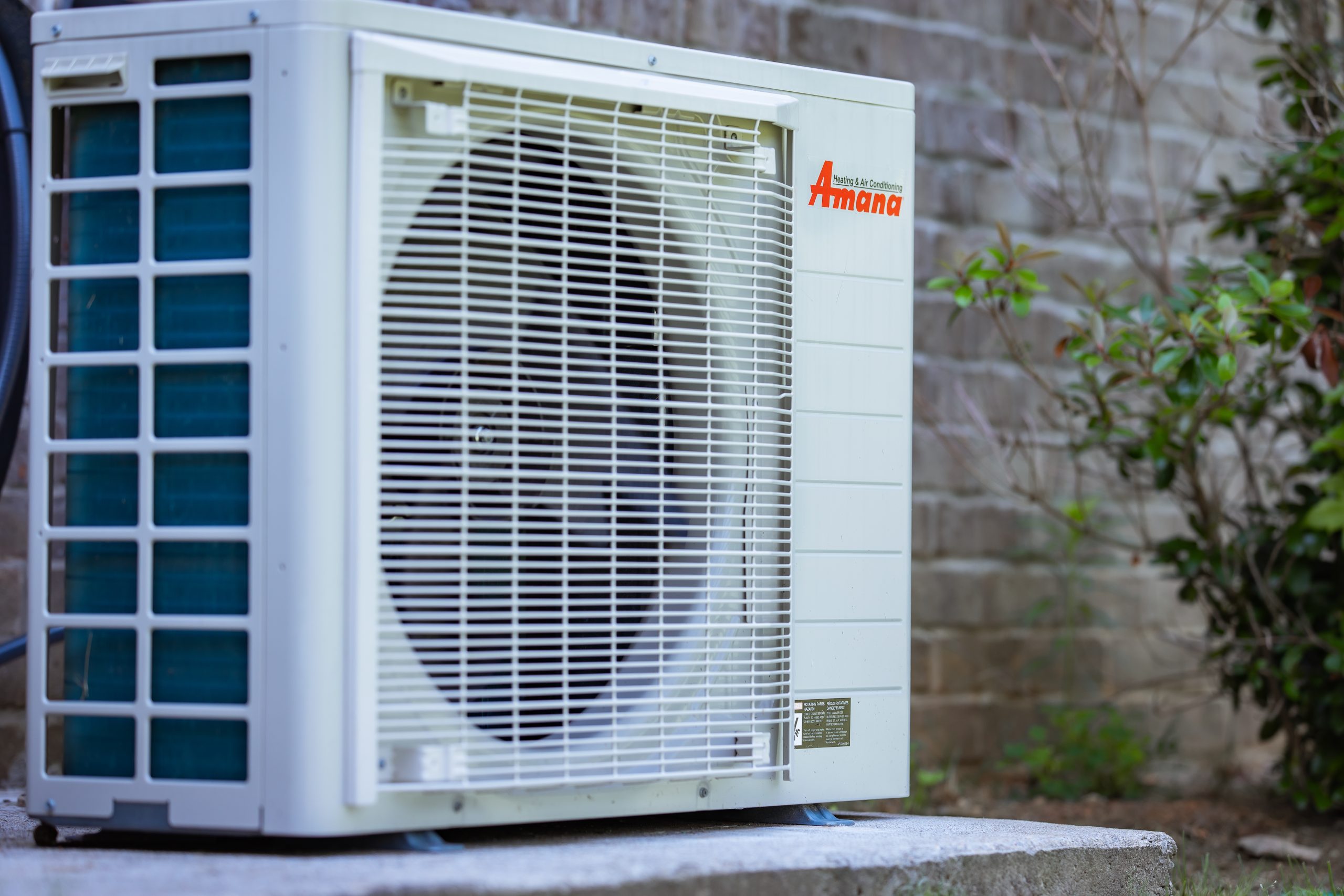
Dual fuel means a heat pump and a gas furnace installed as one system. The heat pump heats the house through fall, spring and most of winter, and the furnace takes over when the outdoor temperature drops below a set point, called the balance point. For Elgin and the Fox Valley, where winters bottom out near 0°F but most heating hours happen in the 20s and 30s, it is often the most practical way to add a heat pump to a home that already has gas.
How a Dual Fuel System Works
A dual fuel setup looks like a normal furnace-and-AC split system. The outdoor unit is a heat pump instead of an air conditioner, and the indoor unit is a gas furnace with the heat pump’s coil sitting on top of it. In summer the heat pump cools the house exactly like an AC. In heating season it runs in reverse, pulling heat from outdoor air and delivering it through the same ductwork the furnace uses.
The furnace is the backup, not a heat strip. That is the key difference from an all-electric heat pump with an air handler. When the heat pump can’t keep up, or when the outdoor temperature falls below the balance point, the thermostat shuts the heat pump off and lights the furnace. The two never run at the same time.
We install these as matched Amana systems, most often an Amana S-Series R-32 inverter heat pump on a high-efficiency condensing furnace. Our owner is NATE certified in both Air Conditioning Installation and Gas Heating Installation, the combination a dual fuel job calls for. See our dual fuel heat pump and furnace page for the installation details.
The Balance Point: Where the Switch Happens
The balance point is the outdoor temperature at which the system stops using the heat pump and starts using the furnace. It’s set on the thermostat during commissioning, and it’s the single most important setting on a dual fuel system. Too high and the furnace runs on days the heat pump could have handled. Too low and the heat pump grinds away where gas would have been the better choice. Two things decide where it should sit.
Factor 1
The heat pump’s capacity curve
Every heat pump loses capacity as it gets colder outside. A cold-climate inverter model like the S-Series keeps producing useful heat well below zero, but there is still a temperature where its output no longer matches what the house is losing. Below that, the furnace should carry the load.
Factor 2
The cost of a unit of heat
Below the capacity point there is an economic point: the temperature at which a therm of gas delivers heat for less than the electricity the heat pump would use. That depends on your ComEd and Nicor Gas rates and the heat pump’s efficiency at that temperature, so we work it out for each install rather than using one number.
On a typical Fox Valley home with a cold-climate heat pump, the balance point lands somewhere in the 20s or low 30s, and can be adjusted after the first winter. The thermostat also gets an aux heat lockout so the furnace can’t fire above the balance point, and staging so the inverter ramps up before the furnace is called at all. That setup is part of every smart thermostat installation we do on a dual fuel system.
Why Both Utility Discounts Apply
Because a dual fuel system is two pieces of qualifying equipment, it can earn two instant discounts, each on its own unit. Both are taken off our invoice with no application to fill out.
| Equipment | Program | Instant discount |
|---|---|---|
| Qualifying ducted heat pump | ComEd | $900 to $2,000 depending on efficiency tier and heating capacity (up to $2,000 at 2.5 heating tons or more) |
| Qualifying gas furnace, 97%+ AFUE | Nicor Gas | $225 |
| Qualifying gas furnace, 95% AFUE | Nicor Gas | $150 |
| Qualifying ENERGY STAR smart thermostat | ComEd, with the heat pump | Adds $75 |
| Qualifying smart thermostat on the furnace invoice | Nicor Gas, with the furnace | Adds $50 ($225 becomes $275; $150 becomes $200) |
The ComEd side requires AHRI-matched equipment and a refrigerant of 700 GWP or less, which R-32 meets. One note for the west side of the Fox Valley: St. Charles, Geneva and Batavia run their own electric utilities, so the CY2026 ComEd heat pump discount isn’t available there, though the Nicor Gas furnace discount still is. As a ComEd Heat Pump-Trained Contractor and Nicor Gas Contractor Circle Installing Member, we handle both on the invoice.
When Dual Fuel Beats All-Electric
A heat pump with an electric air handler and heat strips is a good system, and for a home without gas service it is the obvious choice. But if gas is already at the house, dual fuel usually wins for three reasons.
- The coldest days are handled by gas, not heat strips. Electric backup heat is the most expensive heat there is. On the handful of near-zero nights each winter, a condensing furnace usually delivers backup heat for less.
- The heat pump does the bulk of the season anyway. Most Fox Valley heating hours happen between roughly 20°F and 50°F, where a cold-climate inverter heat pump is at its most efficient.
- It’s a natural upgrade path. If your furnace is fine but your AC is due, a heat pump can replace the AC on the existing furnace and you get dual fuel without touching the heating side. See AC replacement.
All-electric makes more sense when there’s no gas line, when the home is small and tight enough that heat strips would rarely run, or when the goal is to get off gas entirely. We’ll tell you which one fits when we quote it; our heat pumps page covers both paths.
What a Dual Fuel Installation Involves
We size the heat pump to the house rather than copying the old AC nameplate (a Manual J load calculation is available when it’s needed, requested or required), and select the furnace and heat pump as an AHRI-matched pair, which the CY2026 ComEd discount requires. On installation day the old unit is removed and its refrigerant recovered, the new coil goes on the furnace, the line set is sized or replaced, and the system is charged by weight and verified by subcooling. If the furnace is being replaced too, venting and condensate are done as part of a furnace installation. Then the thermostat is configured: equipment type, staging, balance point, aux lockout. That last hour is where dual fuel jobs go right or wrong. Full details are on our heat pump installation page.
Quotes are free, written, and include both discounts. To spread the cost, you can prequalify in about 2 minutes with no impact to your credit score.
Furnace Due Anyway? Do Both at Once
If your furnace is 15 or more years old, replacing it alongside the heat pump gets you a fully matched system, both discounts on one invoice and a single installation day. See furnace replacement for the repair-or-replace math.
Already have a good furnace? A heat pump can go on top of it. Request a free quote and we’ll price both options.
Dual Fuel FAQs
What is a dual fuel HVAC system?
A heat pump paired with a gas furnace as one matched system. The heat pump heats and cools through most of the year, and the furnace takes over below a set outdoor temperature called the balance point. The two never run at the same time.
What is the balance point on a dual fuel system?
The outdoor temperature at which the thermostat switches from the heat pump to the furnace. It’s set during commissioning based on the heat pump’s cold-weather capacity and the relative cost of electricity and gas, usually in the 20s or low 30s for a cold-climate heat pump in the Fox Valley.
Can I get both the CY2026 ComEd and Nicor Gas discounts on a dual fuel system?
Yes. The CY2026 ComEd instant discount of $900 to $2,000 applies to the qualifying ducted heat pump and the Nicor Gas discount of $225 or $150 applies to the qualifying furnace. Each is taken off the invoice for its own piece of equipment. ComEd’s discount isn’t available in St. Charles, Geneva or Batavia, which have their own electric utilities.
Is dual fuel better than an all-electric heat pump in northern Illinois?
If your home already has gas, usually yes. Gas backup handles the near-zero nights for less than electric heat strips, and the heat pump still carries most of the season. All-electric makes sense with no gas line or if the goal is to leave gas entirely.
Can I add a heat pump to my existing furnace?
Often, yes. If the furnace is in good shape and compatible with a matched coil, a heat pump can replace your air conditioner and the system becomes dual fuel. We check the furnace’s blower and control compatibility before quoting it.
Does a dual fuel system need a special thermostat?
It needs a thermostat that understands dual fuel: one that can set a balance point, lock out the furnace above it, and stage an inverter heat pump. We install and configure that as part of the job, and a qualifying ENERGY STAR model adds $75 to the CY2026 ComEd discount.
Find Out What Dual Fuel Would Look Like in Your Home
We’ll size the system to your house, price a matched heat pump and furnace with both discounts included, and show you where the balance point would sit. Free and written.
Discount amounts reflect the 2026 ComEd Energy Efficiency Program for qualifying equipment and are subject to change or cancellation due to funding limits. Rest Assured HVAC LLC is an independent contractor and is not affiliated with or endorsed by ComEd.
Discount amounts reflect the 2026 Nicor Gas Energy Efficiency Program for qualifying equipment installed January 1 through December 31, 2026, and are subject to change or cancellation due to funding limits. Rest Assured HVAC LLC is an independent contractor and is not affiliated with or endorsed by Nicor Gas.
Share this post
