
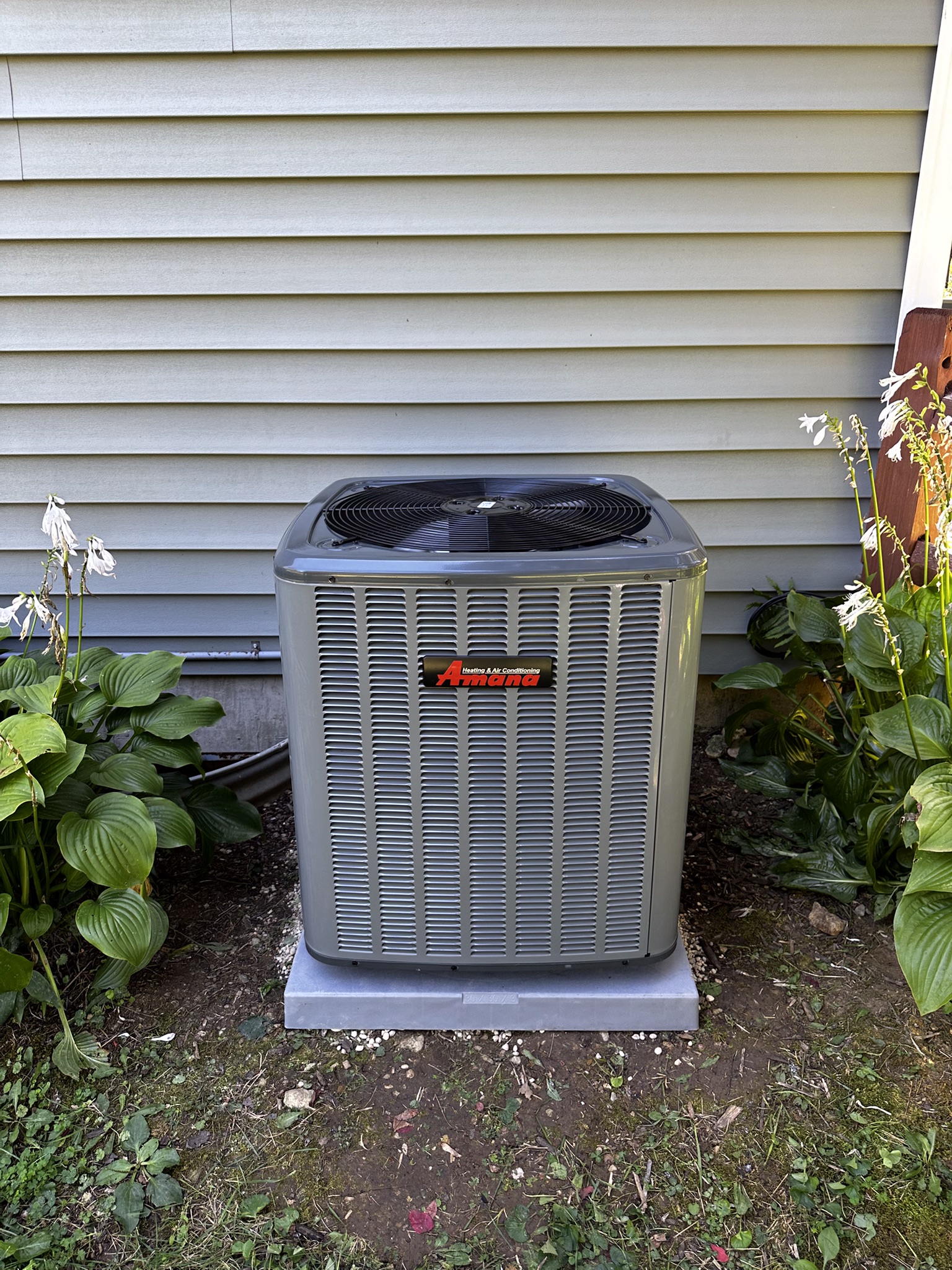
When the air conditioner runs but the house keeps getting warmer, the cause is often something you can check in ten minutes: the thermostat mode, a tripped breaker, a clogged filter, a pulled outdoor disconnect, ice on the refrigerant line, a tripped float switch or a condenser buried in cottonwood. Work through these seven in order before you call. If the system still will not cool, or you find ice, a burnt smell or a compressor that hums and quits, that is the point where it becomes an AC repair call.
First, a Word About Mid-June
The first real heat wave of the year in the Fox Valley usually lands in the middle of June, and it exposes every air conditioner that limped through last September. Our phones fill with the same three words: not cooling, not cooling, not cooling. A surprising share of those calls end with a technician flipping a switch the homeowner could have flipped. We would rather you check the easy things first and save the diagnostic fee for a system that actually needs a technician. Here are the seven checks, in the order we would do them.
The 7 Checks, in Order
1. Thermostat Mode, Setpoint and Batteries
Start at the wall. The thermostat should read Cool, not Heat, Off or Fan Only, and the setpoint should be a few degrees below the room temperature. Fan Only is the classic June mistake: the blower runs, air moves, nothing gets cold. If the display is blank or dim, replace the batteries; a thermostat that is browning out will drop the cooling call without any warning. On a smart thermostat, check that a schedule, an eco setting or a vacation mode has not quietly raised the setpoint.
If the thermostat is on and calling for cooling but nothing outside is running, the problem may be the thermostat’s wiring or its power. That is a job for smart thermostat repair; do not start pulling wires off the sub-base.
2. The Breaker Panel
Most central air systems have two breakers: one for the outdoor condenser (usually a double-pole 20 to 40 amp breaker) and one for the indoor furnace or air handler that runs the blower. A breaker that has tripped sits between On and Off and can be easy to miss. Turn it fully Off, then back On. If it holds, you are probably fine. If it trips again right away, stop there. A breaker that keeps tripping is protecting a compressor, a fan motor or a wiring fault, and resetting it a third time is how a repair becomes a replacement.
3. The Air Filter
A filter that has not been changed since the furnace ran in March is one of the most common reasons an AC will not keep up. It chokes airflow across the indoor coil, the coil gets too cold, and the system loses capacity before it starts to ice. Pull the filter and hold it up to a light. If you cannot see light through it, replace it. Run the system for an hour with the new filter before deciding whether anything else is wrong; a badly starved system needs time to recover.
Filters are also the one thing we ask every AC maintenance customer to keep up between visits, because nothing we adjust on a tune-up survives a filter that is left in for a year.
4. The Outdoor Disconnect
On the wall near the condenser is a small grey box with a pull-out block or a switch. That is the disconnect, and it is the second most common thing we find turned off in June. Landscapers bump it, kids pull it, and a homeowner who shut it off last fall to clean the unit forgets it. Make sure the pull-out is seated firmly and the right way up, or the switch is On. If the disconnect has a fuse block, a blown fuse will look exactly like a dead condenser; that one we should check for you.
5. Ice on the Refrigerant Line or Coil
Look at the larger copper line where it enters the outdoor unit, and at the indoor coil if you can see it. Frost or a sleeve of ice means the coil is running below freezing, and that happens for two reasons: not enough air moving across it (dirty filter, failed blower, closed registers) or not enough refrigerant in it (a leak). Either way the fix starts the same: set the thermostat to Off for cooling and the fan to On, and let the blower thaw the coil for a few hours. Running the compressor against an iced coil can flood it with liquid refrigerant and destroy it.
If a fresh filter and a thaw solve it and the ice stays gone, it was airflow. If it ices again in a day, the system is short on refrigerant, and no amount of thawing will fix a leak. That is a repair, and one where we find the leak rather than just adding refrigerant that will escape again.
6. The Condensate Float Switch and Drain
In a humid Elgin summer the indoor coil pulls gallons of water out of the air every day, and it all leaves through one plastic drain line. When that line clogs with algae, the water backs up, and a float switch in the drain pan or on the line shuts the system off to prevent an overflow. The symptom looks like a dead system: thermostat calling, nothing running, sometimes a small puddle by the furnace.
If you can see standing water in the pan or the drain line’s cleanout, the drain is the problem. Clearing a cleanout with a wet-dry vacuum at the outdoor end of the drain is a reasonable homeowner fix. If the switch keeps tripping or you cannot find the clog, we clear the trap and line as part of the repair, and on the maintenance plan it is part of every spring visit.
7. A Blocked or Buried Condenser
Walk outside while the system runs. The outdoor unit should have warm air blowing out the top and the fan should be turning. Look at the coil around the sides: cottonwood season in the Fox Valley coats condensers in a grey felt that stops heat from leaving the refrigerant, and a coil that cannot shed heat cannot cool the house. Trim shrubs back 2 feet, pull off anything leaning against it, and rinse the coil gently from the inside out with a hose (power off at the disconnect first, and no pressure washer; bent fins are worse than dirty ones).
If the fan is not turning, the top of the unit is hot, or you hear a hum that stops after a few seconds, the condenser has an electrical problem: most often a failed capacitor, sometimes a contactor or fan motor. Do not spin the fan with a stick to start it. Turn it off and call.
When It’s a Repair, and What That Costs
If you have worked through all seven and the house is still warm, the system needs a technician. The same is true if any of these turned up: ice that comes back, a breaker that trips again, a burnt smell, a compressor that hums and quits, a blown fuse in the disconnect or a condenser fan that will not start.
Quick Reference: You or Us?
| What you found | Likely cause | Who fixes it |
|---|---|---|
| Fan Only, wrong mode, dead batteries | Thermostat settings or power | You |
| Breaker tripped once, holds on reset | Nuisance trip or power blip | You, but watch it |
| Breaker trips again | Compressor, fan motor or wiring fault | Repair call |
| Ice, gone after filter change and thaw | Airflow | You |
| Ice that returns | Refrigerant leak | Repair call |
| Float switch tripped, drain visibly clogged | Condensate line | You or us |
| Condenser hums, fan will not spin | Capacitor, contactor or fan motor | Repair call |
| Everything runs, air is just not cold | Charge, compressor or coil | Repair call |
Repair pricing is simple: a flat diagnostic fee to find the problem, then a flat-rate repair price you approve before any work starts. Common AC parts such as capacitors, contactors and fan motors typically run $300 to $1,400 in our area, parts and labor, and most are on the truck. Refrigerant leak repairs and compressors are the expensive end, which is where we put an AC replacement quote next to the repair price so you can compare, with financing you can prequalify for in about 2 minutes with no impact to your credit score. Calls after hours are priced higher than business-hours calls and quoted before we dispatch. Heat pumps and air handlers follow the same checklist; see heat pump repair and air handler repair for the differences.
Still Not Cooling? We’re in Elgin and the Fox Valley Every Day
If the seven checks did not bring the cold air back, book an AC repair visit and we’ll find the actual fault, quote it flat-rate and fix most parts on the same trip.
Elderly family member, newborn or a house past 85 degrees at night? Our emergency AC repair line runs 24/7 at (847) 224-2420. Everything else we do on the cooling side is on the air conditioning page.
AC Not Cooling FAQs
Why is my AC running but not cooling the house?
The most common causes are a thermostat set to Fan Only or Heat, a tripped breaker, a clogged filter, an outdoor disconnect that is off, ice on the coil, a tripped condensate float switch or a condenser coil packed with cottonwood. Check those seven first. If the system still will not cool, it needs a repair diagnosis.
My AC line is frozen. What should I do?
Turn cooling off, set the fan to On, and let the blower thaw the coil for a few hours. Replace the filter. If the ice comes back within a day, the system is low on refrigerant and needs a leak repair, not more refrigerant.
Should I reset the breaker if my AC keeps tripping it?
Reset it once. If it trips again, leave it off and call. A breaker that keeps tripping is protecting the compressor, a fan motor or a wiring fault, and repeated resets can turn a repair into a replacement.
How much does AC repair cost in Elgin?
There is a flat diagnostic fee to find the problem, then a flat-rate repair price you approve before work starts. Common parts such as capacitors, contactors and fan motors typically run $300 to $1,400 in our area. Leak repairs and compressors cost more and often start a repair-vs-replace conversation.
When is an AC that is not cooling an emergency?
When someone in the home is at risk from the heat: an elderly family member, an infant, or a medical condition made worse by a house that will not drop below the mid 80s. We answer 24/7; after-hours calls are priced higher than business hours and quoted before dispatch. Otherwise, a next-morning visit is the cheaper choice.
Get the Cold Air Back
Call or book online for AC repair in Elgin and the Fox Valley. You approve the flat-rate price before we start.
System past 12 years and leaking? See how AC replacement works or prequalify for financing.
Share this post
