
An air conditioner only removes moisture while it is running long enough for the indoor coil to get cold and stay cold, so a system that is oversized, short cycling or set to run its fan constantly can hit the thermostat number and still leave the house at 65 percent humidity. Late July in the Fox Valley is when that shows up: sticky sheets, fogged windows in the morning, a basement that smells like a gym bag. Below is what causes it, what 40 to 60 percent relative humidity actually feels like, and the fixes that work, from a settings change to a whole-home dehumidifier.
How an Air Conditioner Dries the Air (and When It Stops)
Cooling and dehumidifying are the same event. Warm, humid house air passes over the indoor evaporator coil, the coil is colder than the air’s dew point, and moisture condenses on it and runs down the drain. On a humid Elgin afternoon a properly running system pulls gallons of water out of the house every day. But the coil has to be cold for a while before condensation really gets going, usually 10 to 15 minutes into a cycle. A system that satisfies the thermostat in 8 minutes and shuts off never gets there. It cools the air, the humidity stays, and cool damp air feels worse than warm dry air.
That is why the thermostat can read 72 and the house can still feel like a locker room. The temperature target was met. The moisture target was never in the plan.
The Usual Causes We Find in Fox Valley Homes
Most common
An oversized air conditioner
A 4-ton unit on a house that needs 2.5 tons blasts the temperature down and shuts off before the coil has dried anything. Oversizing is common in homes where the last contractor “went a size bigger to be safe,” and it is the number one reason we hear “cold but clammy.” It is fixed at replacement, with proper sizing, not with a service call.
Settings
Fan set to On instead of Auto
With the fan on continuously, the blower keeps running after the compressor stops and blows air across a wet coil, evaporating the water you just removed back into the house. Set the fan to Auto in summer. This one costs nothing and fixes more humid houses than any other single change.
Airflow
Too much airflow across the coil
A blower set to a high cooling speed moves air past the coil so fast it cannot get cold enough to condense much. Lowering the blower’s cooling speed within the manufacturer’s range, or enabling a dehumidification setting on a variable-speed system, lets the coil run colder and wetter. That is an adjustment we make during AC maintenance when the static pressure numbers allow it.
Mechanical
A charge or drain problem
A system that is low on refrigerant or has a fouled coil loses capacity and runs less effectively; a clogged condensate drain lets removed water sit in the pan and evaporate back. Both are found on a tune-up or an AC repair visit.
The house
Moisture coming in faster than the AC removes it
A damp basement or crawl space, a dryer vent that leaks into the utility room, a bathroom fan nobody runs, an open window at night. In July the outdoor dew point can sit in the 70s, and every air leak brings that moisture inside. The AC is fighting a load it was never sized for.
Mild days
Not enough cooling load to run
A 76-degree, rainy July day is the worst case: the house barely needs cooling, so the AC hardly runs, and the humidity climbs anyway. No air conditioner can dehumidify when it has no reason to turn on. That is the case a dehumidifier exists for.
What 40 to 60 Percent Humidity Actually Looks Like
We aim for 40 to 60 percent relative humidity indoors in summer, and closer to 50 if you can get it. An inexpensive hygrometer from the hardware store will tell you where you stand. Here is how the numbers feel in practice.
| Indoor RH | What you notice | What to do |
|---|---|---|
| Below 40% | Dry in summer is rare here; usually an over-aggressive dehumidifier | Raise the dehumidifier setpoint |
| 40 to 50% | Comfortable, sheets feel dry, windows clear | Nothing; this is the target |
| 50 to 60% | Acceptable, the house feels fine at 74 to 76 degrees | Watch the basement, keep the fan on Auto |
| 60 to 65% | Sticky, you keep turning the thermostat down | Check settings, cycle length and the basement |
| Above 65% | Musty smell, condensation on ducts and toilets, dust mites and mold thrive | Dehumidify; this is a moisture problem, not a cooling problem |
Above 60 percent for long stretches is not just uncomfortable. Mold spores, dust mites and the musty smell that comes with them all take off past that line, and wood floors, trim and drywall start moving. Holding the house under 60 is an indoor air quality job as much as a comfort one; see our indoor air quality services for the whole picture.
The Basement Is Usually Where It Starts
Many Elgin-area homes built from the 1960s through the 2000s have a basement with the furnace in it, and a basement is a humidity problem waiting to happen. The walls sit against cool, damp soil, the air down there stays 10 degrees cooler than upstairs, and cooler air holds less moisture, so relative humidity in a basement runs 10 to 20 points higher than the main floor even when the same air is circulating. Add a sump pit, a floor drain and a dryer, and you have the source of the clammy feeling upstairs, because basement air rises through the stairwell and every gap in the floor all summer long.
Two things follow from that. First, a portable dehumidifier in the basement helps, but a bucket-emptying unit rated for a bedroom will run nonstop in a 1,200-square-foot basement and never catch up. Second, drying the basement dries the whole house, because you are treating the source rather than the symptom. That is why we usually put a whole-home dehumidifier there. Our AprilAire basement and crawl space page covers the details.
The Whole-Home Dehumidifier Fix
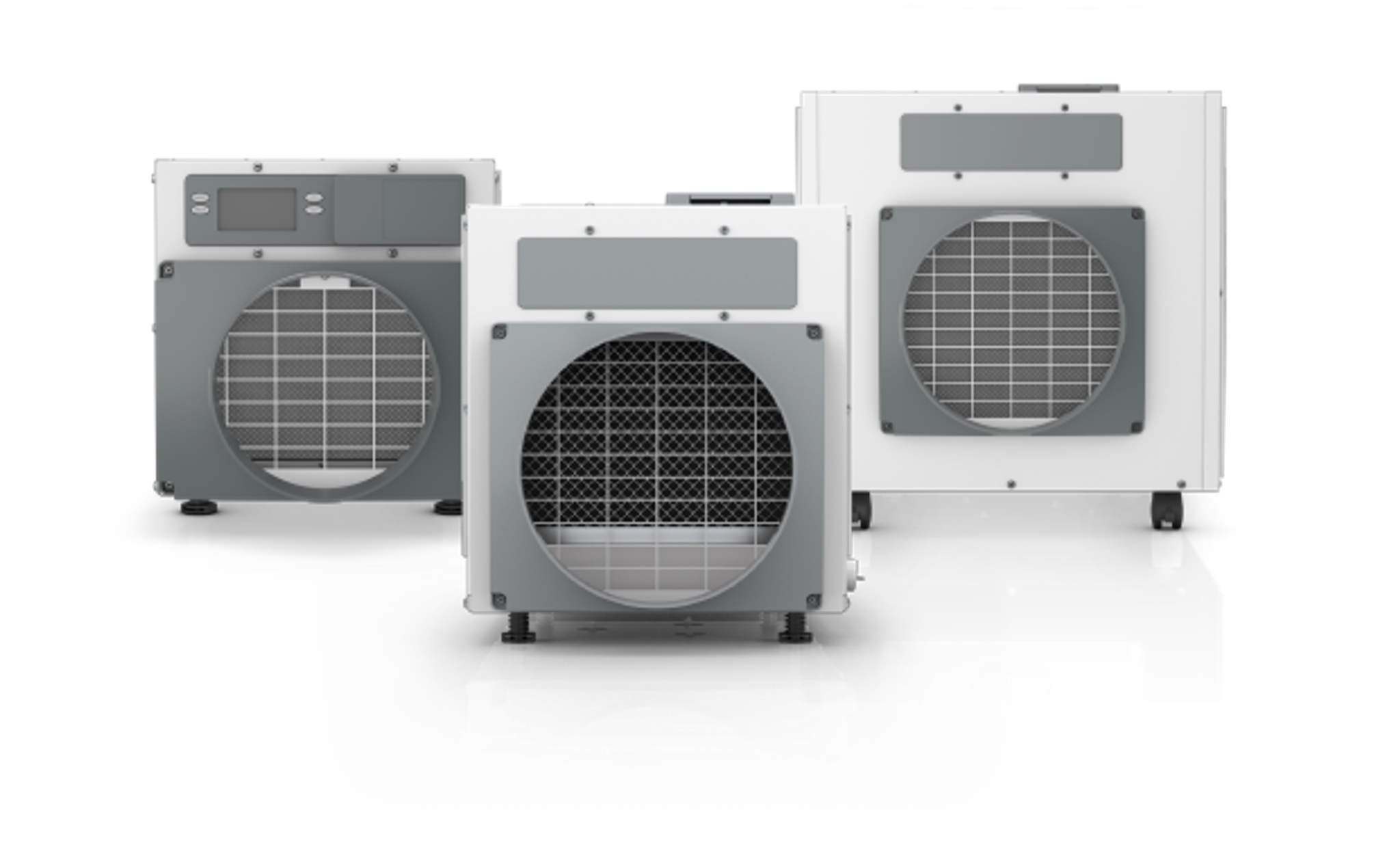
When the settings are right, the AC is sized reasonably and the house is still over 60 percent, a whole-home dehumidifier is the tool that finishes the job. Our standard unit is the AprilAire E100W: it removes up to 100 pints (12.5 gallons) of water per day, handles homes up to 5,500 square feet, drains itself to a floor drain or condensate pump so there is no bucket, and connects to Wi-Fi so you can set and read the humidity from your phone. The E050 through E130 line covers smaller and larger homes.
It can be installed one of two ways. Ducted into the return of the furnace or air handler, it dries the air for the whole house whether the AC is running or not, which is exactly the rainy-July-day problem solved. Standalone in the basement or crawl space, it treats the source directly and is the simplest install. Either way it runs on its own humidistat, independent of the thermostat, so it only works when the humidity calls for it. Details are on our dehumidifier installation page, and if you already have one that is not keeping up, dehumidifier repair covers the frozen coils, drain clogs and sensor faults we see most.
- Best fit: homes with a damp basement, homes where the AC is oversized but not old enough to replace, and anyone who wants the house under 55 percent on mild, humid days.
- What it does not fix: water actively coming through the foundation, a missing sump pump, or a dryer venting indoors. Those get fixed first.
- Upkeep: a filter check at the spring and fall maintenance visits, and a drain that stays clear.
If the AC Is Oversized, Fix It at Replacement
There is no adjustment that turns a 4-ton air conditioner into a 2.5-ton one. If your system is 12 or more years old, short cycles, and leaves the house clammy, the permanent fix is a right-sized replacement. On an AC replacement we size the system to the actual house (insulation, windows, orientation, square footage) instead of copying the tonnage off the old unit, and a two-stage or variable-speed system that runs longer, gentler cycles removes far more moisture than a single-stage unit of the same size. The AC installation page walks through the sizing and commissioning steps.
Quotes are free and written, and you can prequalify for financing in about 2 minutes with no impact to your credit score. If the AC is newer and just oversized, the dehumidifier is the cheaper answer and buys you years before replacement makes sense.
Get the Humidity Out, Not Just the Heat
Start with the free settings: fan to Auto, bathroom fans on, windows closed at night. If the house is still over 60 percent, a whole-home dehumidifier in the basement usually ends the problem for the whole house.
Not sure whether it’s the AC or the house? Request a free visit and we’ll measure the humidity, cycle length and airflow before recommending anything. Our full AprilAire dehumidifier lineup is on the brand page.
Humid House FAQs
Why is my house humid when the AC is running?
Usually because the air conditioner is oversized or short cycling, so the coil never runs long enough to condense much moisture, or because the fan is set to On and is blowing water off the wet coil back into the house. A damp basement, air leaks and mild humid days when the AC barely runs make it worse.
What indoor humidity should I aim for in summer?
40 to 60 percent relative humidity, and closer to 50 if you can. Above 60 percent for long stretches invites mold, dust mites and the musty basement smell, and makes 74 degrees feel like 78.
Should the AC fan be set to On or Auto?
Auto in summer. With the fan On, the blower keeps running after the compressor stops and re-evaporates the water sitting on the coil, raising the humidity you just removed.
Will a whole-home dehumidifier fix a humid house?
In most Fox Valley homes, yes, especially when the moisture starts in the basement. The AprilAire E100W removes up to 100 pints a day for homes up to 5,500 square feet, drains itself and runs on its own humidistat, so it works on mild days when the AC does not run.
Is an oversized air conditioner really a problem?
Yes. It cools the air fast and shuts off before dehumidifying, which is why the house feels cold and clammy. It also wears out sooner from constant starts. The fix is a replacement sized to the house rather than the old nameplate, with a Manual J load calculation available on request; until then, a dehumidifier covers the gap.
Measure It, Then Fix It
Call or book online and we’ll check your humidity, cycle times and airflow in Elgin and the Fox Valley, then show you the options in writing.
Ready for a right-sized system? Request a free replacement quote or see financing options.
AprilAire and Healthy Air System are trademarks of Research Products Corporation. Rest Assured HVAC LLC is an independent AprilAire Preferred Partner.
Share this post
